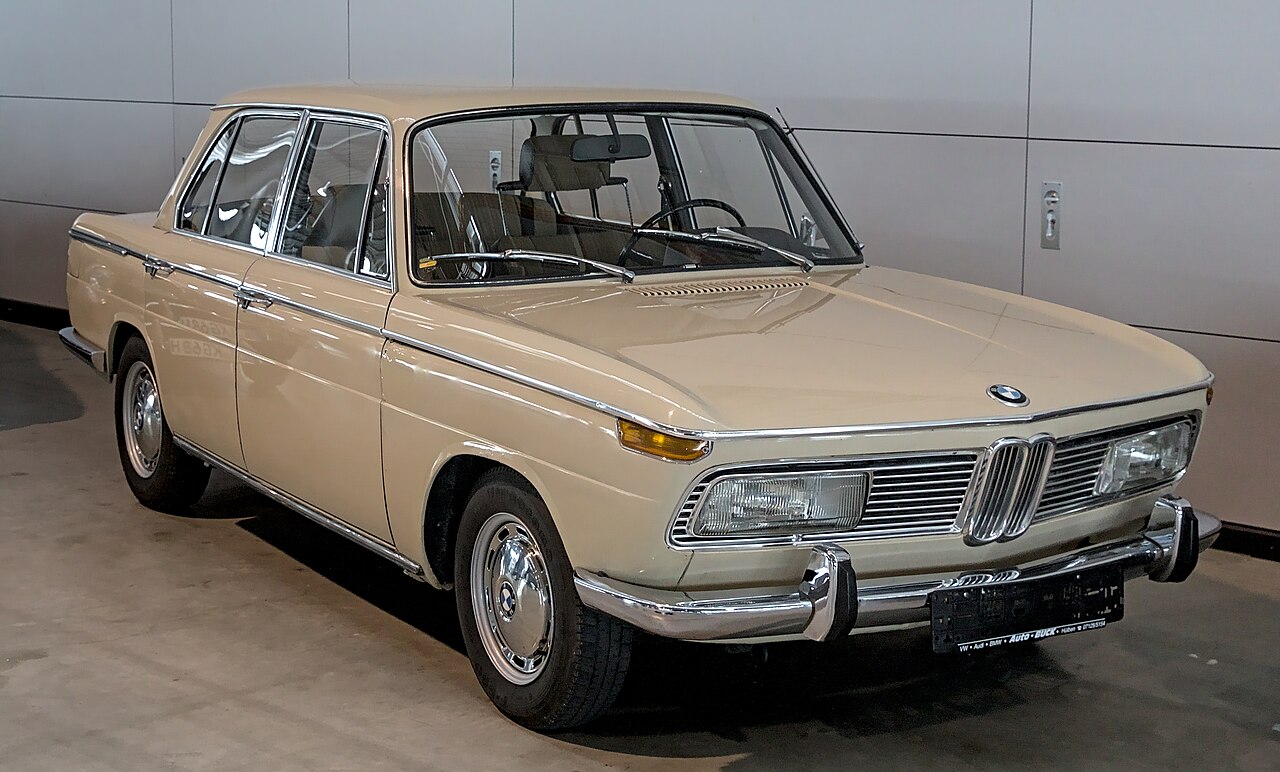
The Phoenix Rises: How the BMW New Class Rescued a Legend and Forged its Soul
In the annals of automotive history, few model lines can claim to have single-handedly saved a company from the brink of collapse while simultaneously defining its future identity. The BMW New Class, known in its native German as the Neue Klasse, is precisely one such legend. Produced between 1962 and 1972, these revolutionary sedans and coupes didn't just ensure BMW's solvency during a dire financial crisis in the 1950s; they fundamentally established the marque's now-iconic image as a purveyor of luxury sports sedans, a reputation that endures to this day.
Before the New Class, BMW was a company adrift. Its product portfolio was a perplexing mix of high-end, increasingly outdated luxury cars, and quirky, motorcycle-engine-powered economy cars like the Isetta. With an increasingly affluent post-war society seeking more sophisticated and practical vehicles, BMW found itself in a precarious position. The story of the New Class is one of bold vision, engineering prowess, and a dramatic turnaround that cemented BMW’s place in the automotive world.
A Company on the Brink: BMW in the 1950s
The 1950s were a challenging decade for BMW. While the company had a proud pre-war history of sophisticated automobiles, its post-war offerings were struggling to find a coherent market. On one end of the spectrum were opulent, but financially draining, luxury cars with displacements of two liters or greater, such as the 501 and 502 V8 'Baroque Angels'. These vehicles, while elegant, were expensive to produce, sold in low volumes, and were quickly becoming outmoded compared to newer designs from competitors.
At the other extreme, BMW relied heavily on the success of its diminutive, motorcycle-engine-powered economy cars and, of course, its motorcycles. Models like the Isetta and 600 microcars were vital for keeping the lights on, but they represented a bygone era of austerity. As the West German economy boomed, consumers desired more substantial, comfortable, and performance-oriented vehicles. BMW lacked a compelling product in the crucial 1.5 to 2-liter class, a segment that was rapidly growing in popularity and profitability across Europe.
Several attempts to fill this gap, including prototypes powered by a 1.6-liter engine based on a bank of the existing V8, proved unconvincing. The company was bleeding money, and by the end of the decade, bankruptcy was a very real threat. It was a crisis that demanded radical action, not just incremental improvements. The stage was set for a dramatic intervention.
The Dawn of a New Era: Project "Neue Klasse" Begins
The turning point arrived in 1960 when Herbert and Harald Quandt, influential German industrialists, made a substantial investment in BMW, gaining a controlling interest. Their faith in the company, coupled with a refusal to sell to Daimler-Benz, provided the much-needed capital and strategic direction. With renewed confidence, the "Neue Klasse" project officially commenced.
This was no ordinary car development; it was a mission to redefine BMW. The project was led by an all-star team: Fritz Fiedler, a legendary engineer, oversaw the entire initiative. Eberhard Wolff was tasked with chassis design, Wilhelm Hofmeister with styling and body engineering, and Alex von Falkenhausen was responsible for the crucial new engine design. What made this team’s undertaking so monumental was the mandate to create an entirely new car with an entirely new engine – a feat BMW hadn't accomplished since the 303 in 1933.
The fruit of their labor was unveiled in September 1961 at the Frankfurt Motor Show: the BMW 1500 four-door saloon. This wasn't just a new model; it was a statement. Positioned alongside the BMW 3200 CS, the last model to feature the old OHV V8, the 1500 boldly heralded BMW's future. The term "New Class" itself referred to this vital 1.5–2-liter segment, a market from which BMW had been conspicuously absent since World War II.
Engineering Excellence and Design Innovation
The BMW New Class wasn't just a commercial success; it was an engineering and design triumph that laid the groundwork for BMW’s future. The cars featured a modern, angular aesthetic, a departure from the curves of the 1950s. While Wilhelm Hofmeister led the body engineering, Italian stylist Giovanni Michelotti also contributed significantly to the clean, purposeful lines. The iconic vertical kidney grille, which would become a BMW hallmark, was prominently featured, giving the cars a distinct and aggressive face.
- The M10 Engine: A Legend is Born: At the heart of the New Class was the revolutionary M10 (initially M115) OHC 4-cylinder engine. Designed by Alex von Falkenhausen, this modular engine was a marvel of efficiency, power, and durability. Ranging from 1.5 liters in the original 1500 to 2.0 liters in later variants, it provided strong performance for its time. More than just a power plant for the New Class, the M10 became one of BMW's most enduring and versatile engines, powering not only the subsequent 02 Series but also being developed for racing applications and forming the basis for BMW engines well into the 1980s. Its longevity and adaptability are a testament to its brilliant design.
- The Hofmeister Kink: A Signature Detail: A subtle yet enduring design element introduced with the New Class was the Hofmeister Kink. First appearing on the 2000 C and 2000 CS luxury coupés in 1965, this distinctive counter-curve at the base of the C-pillar, where it meets the rear window, has been a staple on nearly every BMW since. It’s a testament to the meticulous attention to detail and the forward-thinking design philosophy that permeated the Neue Klasse project.
- Expanding the Range: The initial 1500 sedan was swiftly followed by a range of successful models. The 1600 and 1800 sedans arrived in 1964, offering more power and options. High-performance variants like the 1800 TI (Turismo Internazionale) and later the fuel-injected 2000 tii cemented BMW's reputation for driving dynamics. The elegant two-door 2000 C and 2000 CS coupes joined the lineup in 1965, offering a more luxurious and sporting experience. Crucially, the iconic 02 Series, a shortened two-door version of the New Class sedans, debuted in 1966 and further broadened BMW’s appeal, especially to a younger, more enthusiast-oriented market.
Advanced production techniques, rigorous quality controls, and a focus on lightweight construction using steel body panels all contributed to cars that were not only stylish but also robust and engaging to drive. These innovations enhanced performance and handling, allowing BMW to compete fiercely in the competitive European market.
The Impact and Legacy: How the New Class Reshaped BMW
The impact of the BMW New Class cannot be overstated. From a company teetering on the edge of insolvency, BMW transformed into a thriving, respected automotive powerhouse. Between 1960 and 1970, the New Class tripled BMW's sales and increased revenue more than sevenfold. A total of 339,814 units were produced over its decade-long run, a clear indication of its widespread appeal and success.
More than just a financial savior, the New Class single-handedly forged BMW's identity. It created the blueprint for the "luxury sports sedan" – a vehicle that combined comfortable accommodation with engaging driving dynamics and robust engineering. This identity, characterized by its emphasis on driver involvement, sophisticated engineering, and performance, became the bedrock of the BMW brand.
The New Class also laid the foundational architecture for future BMWs. Its four-door sedans were replaced by the larger E12 5 Series in 1972, directly inheriting its philosophical approach and many of its engineering principles. The New Class coupes made way for the magnificent E9 2800 CS in 1969, a car that further refined BMW's luxury coupé offering. This evolution showcased a consistent brand direction born from the success of the New Class.
For collectors and enthusiasts today, understanding the specific models and their historical significance is key. Each New Class variant offers a unique glimpse into the brand’s resurgence, from the groundbreaking 1500 to the sporty 2000 tii. These cars represent a pivotal moment, a decade that truly transformed BMW into the luxury brand we recognize today. To delve deeper into this transformative period, you can explore The BMW New Class: A Decade That Transformed a Luxury Brand.
In conclusion, the BMW New Class was far more than just a successful line of automobiles. It was a lifeline, a declaration of intent, and a meticulously engineered statement of purpose. It not only pulled BMW from the brink of financial ruin but, more profoundly, instilled in the company a distinct identity rooted in driving pleasure, innovative engineering, and timeless design. The legacy of the New Class is visible in every BMW that has followed, a testament to its enduring influence and its pivotal role in shaping one of the world's most admired automotive brands.