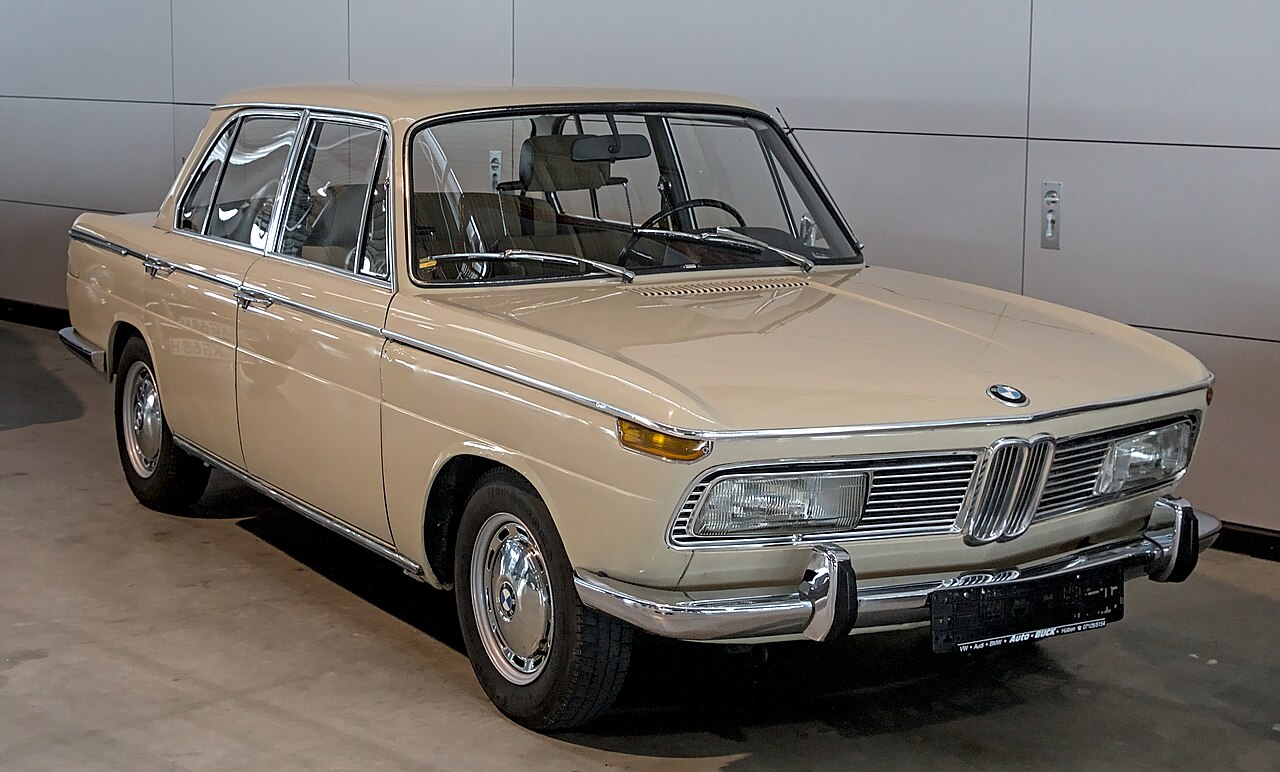
The BMW New Class: A Decade That Transformed a Luxury Brand
The annals of automotive history are replete with tales of innovation and evolution, but few narratives resonate with the dramatic impact of the
Bmw New Class (German: *Neue Klasse*). Spanning a pivotal decade from 1962 to 1972, this line of sedans and coupes didn't just introduce new models; it single-handedly rescued a floundering luxury brand from the precipice of financial ruin and meticulously crafted the very DNA that defines BMW to this day: the ultimate driving machine, a luxury sports sedan.
Before the *Neue Klasse*, BMW's identity was fractured. Their lineup consisted of unwieldy, increasingly outdated luxury cars, alongside quirky, motorcycle-engined economy cars, and, of course, motorcycles. As post-war prosperity grew, the market shifted, and BMW found itself without a compelling product in the crucial 1.5 to 2-liter mid-size segment. Their luxury offerings were unprofitable, and the smaller cars appealed less to an increasingly affluent society. The company's very existence was in jeopardy. This dire situation set the stage for one of the most remarkable corporate turnarounds in automotive history, spearheaded by the
BMW New Class: How It Rescued the Company and Forged Its Identity.
From Crisis to Vision: The Birth of the Neue Klasse Project
The turning point arrived in 1960 when the Quandt family, led by Herbert and Harald Quandt, made a significant investment, securing a controlling interest in BMW. This infusion of capital and decisive leadership allowed for a radical strategic shift. That same year, the "Neue Klasse" project was initiated. It was a monumental undertaking, as BMW hadn't designed an entirely new car with a new engine since the 303 in 1933. This was not merely an update; it was a complete reinvention.
The project was an all-star collaboration of BMW's finest minds. Fritz Fiedler oversaw the entire endeavor, a testament to his engineering prowess. Eberhard Wolff meticulously crafted the chassis design, ensuring dynamic handling characteristics. Wilhelm Hofmeister, a name synonymous with enduring BMW design, was responsible for the styling and body engineering, while Alex von Falkenhausen led the charge on engine development. This collective genius aimed to deliver a car that was not only competitive but visionary, marrying performance with sophistication.
The fruit of their labor debuted in September 1961 at the Frankfurt Motor Show: the BMW 1500 four-door saloon. It stood as a beacon of modernity, presented alongside the BMW 3200 CS, which would be the last BMW to feature the old OHV V8 engine. The "New Class" was literally a new class of automobiles for BMW, filling the critical 1.5-2 liter segment that had been conspicuously absent since World War II.
Engineering Excellence: The M10 Engine and Design Innovation
At the heart of the
Bmw New Class was a revolutionary piece of engineering: the M10 OHC 4-cylinder engine. (Initially known as the M115). This overhead camshaft engine was a departure from BMW's past powerplants and quickly became a benchmark for performance and reliability. Its modular design allowed for various displacements, from 1.5 to 2.0 liters, making it incredibly versatile. Producing 80 horsepower in its base 1500 iteration, and climbing to over 130hp in later performance variants like the 2000 tii, the M10 provided the *Neue Klasse* with a lively, responsive character that was crucial for establishing BMW's reputation for driving dynamics. This engine would go on to power countless BMW models for decades, even forming the basis for Formula 1 championship-winning engines – a testament to its foundational brilliance.
Beyond the engine, the
Neue Klasse models introduced design elements that would become iconic for the brand. Wilhelm Hofmeister’s touch was evident throughout, most notably with the introduction of the
Hofmeister Kink and M10: BMW New Class's Enduring Legacy. This distinctive counter-curve at the base of the C-pillar, where the rear window meets the body, has since been incorporated into nearly every BMW vehicle. It subtly communicated dynamism and solidity, a visual cue that has become synonymous with BMW’s identity. Italian stylist Giovanni Michelotti also contributed to the modern, angular aesthetic, which featured a prominent vertical kidney grille – another hallmark that endures today. The cars emphasized lightweight construction with steel body panels and rigorous quality controls in advanced production techniques, all contributing to superior performance and handling in a competitive market.
Expanding the Lineup: From 1500 to the Legendary 02 Series
The initial success of the 1500 sedan quickly paved the way for an expanded lineup. In 1964, BMW introduced the 1600 and 1800 sedans, offering more power and refinement. High-performance variants soon followed, such as the 1800 TI (Turismo Internazionale) and the fuel-injected 2000 tii, solidifying the
Bmw New Class's reputation for sporty capability. These cars weren't just fast; they offered a sophisticated driving experience with excellent road holding and precise steering – qualities that set them apart from many competitors.
In 1965, the range was further broadened with the introduction of luxury coupes, the 2000 C and 2000 CS. These elegant two-door models combined the mechanical prowess of the sedans with a more luxurious interior and sleek, pillarless coupe styling, appealing to a different segment of the luxury market.
Perhaps the most beloved and influential offshoot of the *Neue Klasse* was the *02 Series*. Introduced in 1966, the 02 models (such as the 1600-2, 2002, and 2002tii) were essentially shortened, two-door versions of the New Class sedans. By reducing the wheelbase and shedding some weight, BMW created a lighter, nimbler, and even more sporting car that captivated enthusiasts worldwide. The 02 Series, particularly the iconic 2002, became legendary for its driving purity and remains highly sought after by collectors today. It perfectly distilled the essence of the Bmw New Class into a more compact, overtly sporting package.
An Enduring Legacy: Paving the Way for Modern BMW
The decade-long run of the
Bmw New Class models achieved astonishing success. By 1970, total production had reached 339,814 units, tripling BMW's sales between 1960 and 1970 and increasing revenue more than sevenfold. This financial triumph guaranteed BMW's solvency and provided the stable foundation needed for future growth.
The replacement of the New Class models began in 1969 with the introduction of the six-cylinder E9 2800 CS, which superseded the 2000 C and 2000 CS coupes, evolving the luxury coupe segment. In 1972, the four-door sedans gave way to the larger and more refined E12 5 Series. The 5 Series, with its emphasis on driving dynamics, quality, and a sophisticated cabin, directly inherited the philosophy and many of the engineering principles established by the *Neue Klasse*.
Practical Insights for Enthusiasts and Collectors:
*
Identify the Kink: If you're looking at an early BMW, the presence of the Hofmeister Kink is a clear indicator of its connection to the *Neue Klasse* design lineage.
*
M10 Engine's Longevity: The M10 engine's robust design means many original *Neue Klasse* cars are still running with their original engines. Look for evidence of regular maintenance.
*
Model Variance: Understand the differences between the 1500, 1600, 1800, and 2000 sedans, and the C/CS coupes. Performance variants like the TI and tii models are particularly prized for their historical significance and driving engagement.
*
02 Series Connection: Remember that the popular 02 Series is a direct descendant, sharing much of the New Class's chassis and engine DNA, just in a more compact form factor.
In essence, the Bmw New Class didn't just introduce new cars; it introduced a new BMW. It forged the company's identity as a maker of technically advanced, sporty, and luxurious vehicles, a reputation that has only strengthened over the ensuing decades. This period wasn't merely a chapter in BMW's history; it was the foundation upon which the modern BMW brand was built, ensuring its survival and setting its course towards global automotive leadership.