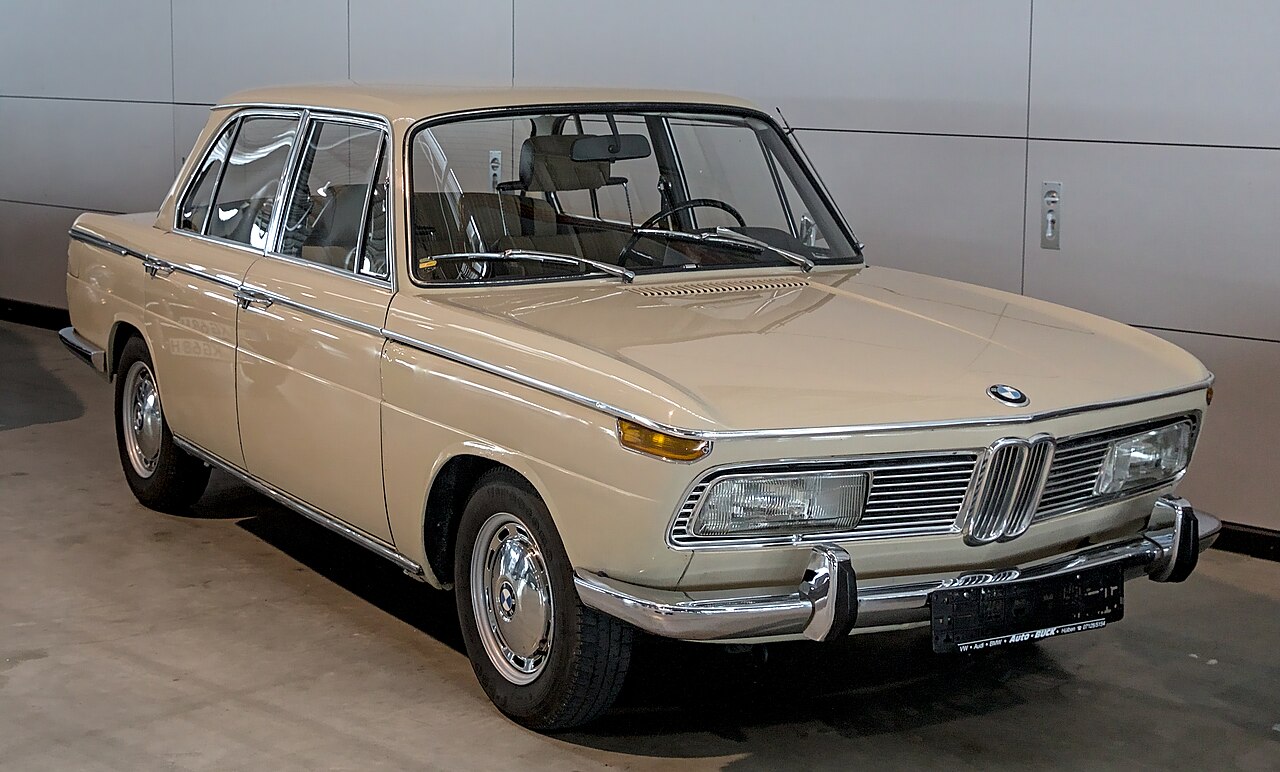
Hofmeister Kink and M10: BMW New Class's Enduring Legacy
The history of BMW is rich with innovation and iconic design, but few periods are as pivotal as the decade between 1962 and 1972, marked by the arrival of the BMW New Class (German: Neue Klasse). This line of sedans and coupes wasn't just a collection of new models; it was a lifeline that pulled BMW from the brink of financial collapse, redefined its brand identity, and introduced design and engineering hallmarks that remain synonymous with the Bavarian automaker to this day. Among its most celebrated contributions are the venerable M10 engine and the instantly recognizable Hofmeister kink, both testaments to the New Class's profound and lasting impact.
The Genesis of a Game-Changer: Rescuing BMW from the Brink
The late 1950s presented a dire challenge for BMW. The company's diverse product portfolio, spanning opulent, large-displacement luxury cars, motorcycle-engined economy cars, and motorcycles, was becoming increasingly unsustainable. Their high-end offerings, though prestigious, were outdated and unprofitable, while the smaller, more basic models struggled to appeal to an increasingly affluent West German society. BMW desperately needed a modern, competitive vehicle in the crucial 1.5 to 2-liter segment—a class they had been absent from since before World War II. Prototypes utilizing a derivative of their OHV V8 engine proved unconvincing, signaling the need for a truly fresh start.
Salvation arrived in 1960 when Herbert and Harald Quandt made a substantial investment, securing a controlling interest in the struggling company. This financial injection paved the way for the "Neue Klasse" project, a bold initiative to develop an entirely new car with an all-new engine—a feat BMW hadn't accomplished since the 303 in 1933. Under the overall leadership of Fritz Fiedler, a formidable team was assembled: Eberhard Wolff spearheaded chassis design, Wilhelm Hofmeister was responsible for styling and body engineering, and Alex von Falkenhausen took charge of the engine design. The fruit of their labor, the BMW 1500 four-door saloon, debuted triumphantly at the September 1961 Frankfurt Motor Show, signaling the dawn of a new era for BMW and establishing the template for the modern sports sedan. This launch alongside the BMW 3200 CS, the last V8-powered BMW, symbolized a torch being passed to a new generation of vehicles. To delve deeper into this critical period, read about BMW New Class: How It Rescued the Company and Forged Its Identity.
Engineering Brilliance: The M10 Engine's Enduring Power
At the heart of the BMW New Class was an engineering marvel: the M10 engine. Initially designated M115, this overhead camshaft (OHC) 4-cylinder powerplant was revolutionary for BMW. Designed by Alex von Falkenhausen, it was robust, reliable, and remarkably versatile. Debuting in the 1500 with a 1.5-liter displacement, the M10 was engineered for modularity, allowing BMW to easily scale its displacement up to 2.0 liters to power subsequent models like the 1600, 1800, and 2000 variants, including high-performance Ti and tii versions.
The M10's innovative design offered a fantastic combination of performance and durability. Its cross-flow cylinder head, hemispherical combustion chambers, and robust iron block laid the foundation for BMW's reputation for producing free-revving, eager engines. This wasn't just a temporary solution; the M10 proved to be one of the most successful engines in automotive history. It powered not only the entire BMW New Class but also the beloved 02 Series (a shortened New Class chassis), the first generation E21 3 Series, and even found its way into Formula 1, where a heavily modified, turbocharged version propelled Nelson Piquet to a World Championship in 1983. Its exceptional longevity and adaptability underscored BMW's commitment to engineering excellence and cemented its legacy as a cornerstone of the brand's performance identity. For enthusiasts and restorers, understanding the M10's capabilities and its robust design can be key to appreciating its ongoing relevance in classic BMW maintenance and upgrades.
Design Iconography: The Birth of the Hofmeister Kink
While the M10 engine provided the brawn, the BMW New Class also introduced an elegant design signature that would become synonymous with the brand's aesthetic for decades: the Hofmeister kink. Named after Wilhelm Hofmeister, BMW's director of styling and body engineering, this subtle yet distinctive design cue first appeared on the New Class coupes, specifically the 2000 C and 2000 CS, launched in 1965.
The Hofmeister kink is characterized by the forward bend at the base of the C-pillar, where it meets the lower edge of the rear window. It's a small detail, but its impact is profound. Aesthetically, it creates a sense of dynamic forward motion, visually emphasizing the vehicle's rear-wheel-drive architecture and hinting at the power being sent to the back wheels. Functionally, it offers a wider rear door opening and can contribute to the structural integrity of the C-pillar. More importantly, it became a powerful branding element. From its debut on the New Class coupes, the Hofmeister kink has been integrated into nearly every BMW model, from the smallest compact to the largest luxury sedan, acting as an instantly recognizable identifier that links generations of BMWs together. It's a testament to Hofmeister's visionary approach that such a minor detail could become such a significant and enduring part of a global luxury brand's visual language.
Beyond the New Class: Its Transformative Impact on BMW
The success of the BMW New Class was nothing short of miraculous. Between 1960 and 1970, the New Class models single-handedly tripled BMW's sales and increased revenue more than sevenfold, ensuring the company's financial solvency and paving the way for future prosperity. With a total production of 339,814 units, these cars established BMW's identity as a manufacturer of sophisticated, sporty, and driver-focused luxury sedans.
Its influence extended far beyond its production run. The New Class directly spawned the iconic 02 Series, a shorter, sportier two-door variant that captivated a new generation of enthusiasts and further solidified BMW's reputation for engaging driving dynamics. When the time came for replacement, the principles forged by the New Class were carried forward. The New Class coupes were succeeded by the elegant 6-cylinder E9 2800 CS in 1969, and in 1972, the four-door sedans gave way to the larger, more refined E12 5 Series, which inherited the New Class's DNA of executive sportiness. Understanding this lineage is crucial for any BMW enthusiast, as it reveals how the brand meticulously evolved its core values. The lessons learned in production efficiency, quality control, and lightweight construction during the New Class era became foundational pillars for BMW's subsequent models, setting a high bar for engineering and design that continues to define the brand today. Discover more about this defining period by reading The BMW New Class: A Decade That Transformed a Luxury Brand.
A Lasting Legacy: Why the New Class Matters Today
The BMW New Class stands as a monument to visionary leadership, engineering prowess, and timeless design. It was the crucial turning point that rescued BMW from extinction, establishing the very identity that makes a BMW a BMW: a performance-oriented, driver-focused luxury sports sedan. The longevity of the M10 engine, which powered BMWs for decades, and the enduring presence of the Hofmeister kink, a subtle yet powerful design signature, are constant reminders of the New Class's foundational role. These vehicles weren't just cars; they were a blueprint for the future, demonstrating how innovative thinking could transform a struggling company into a global automotive powerhouse. Their legacy resonates in every BMW built since, making the New Class not just a chapter in history, but the very cornerstone of the brand.